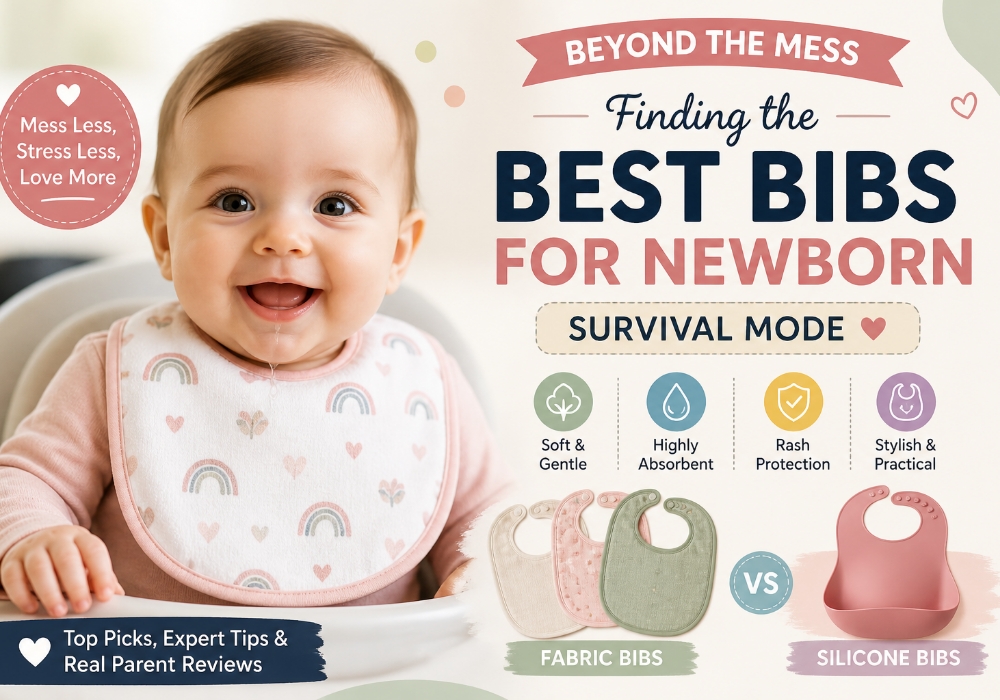
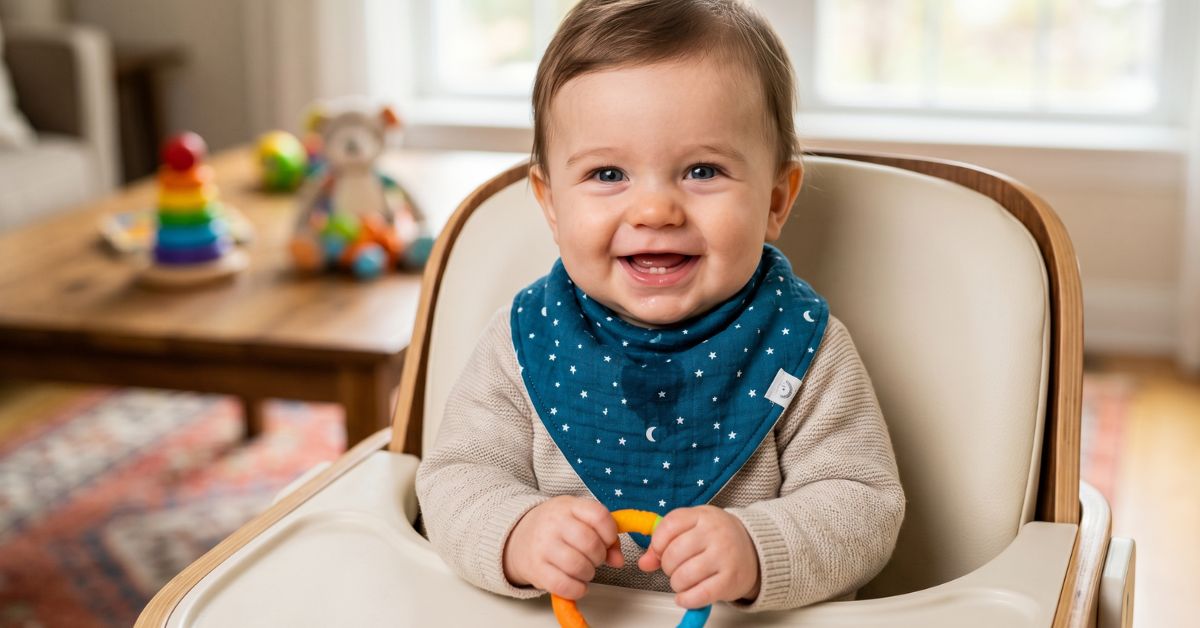
Best Baby Bibs for Drooling Babies can help keep your baby’s clothes dry, comfortable, and protected throughout the teething and drooling stages.
If your baby drools throughout the day and you find yourself changing outfits every few hours, you’re not alone. Drooling is a normal part of infancy, especially during teething, but it can leave clothes soaked and cause irritation around the neck and chest.
I’m Ashish, and I have spent over 20 years working with newborn baby products and helping parents choose practical baby essentials. Over the years, one common concern I’ve heard from parents is how difficult it can be to find a bib that actually keeps clothes dry while remaining comfortable for the baby.
With hundreds of baby bibs available today, choosing the right one can be overwhelming. To make your decision easier, I’ve reviewed popular bib styles, materials, absorbency levels, comfort features, and parent feedback to create this list of the Best Baby Bibs for Drooling Babies in 2026.
In this guide, you’ll find a comparison table, detailed product recommendations, a practical buying guide, and answers to common questions to help you choose the right bib for your baby’s needs.
If you’re preparing for a new arrival, don’t miss our guide to the best baby sleep products in 2026 and our complete premature baby clothes guide for tiny preemies.
- The 10 best baby bibs for heavy droolers
- A quick comparison table
- A buying guide for parents
- Common mistakes to avoid
- Frequently asked questions
Let’s get started.
Learn more about OEKO-TEX Standard 100 certification for baby-safe textiles
Special bibs help absorb drool, protect your baby’s clothes, and reduce skin irritation during the teething stage.
Table of Contents
Why Drooling Babies Need Special Bibs
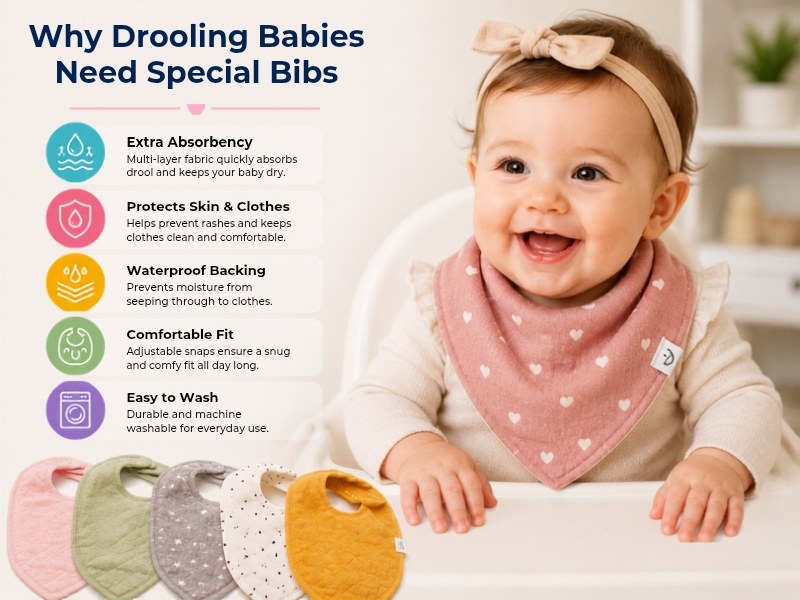
Regular cotton bibs often become soaked quickly, especially for babies who drool heavily during teething.
A high-quality drool bib should offer:
- Multiple absorbent layers
- Soft, skin-friendly fabric
- Waterproof or moisture-resistant backing
- Adjustable snaps for a secure fit
- Easy machine washing
The right bib helps keep your baby’s clothes dry and may reduce skin irritation caused by constant moisture.
10 Best Baby Bibs for Drooling Babies in 2026
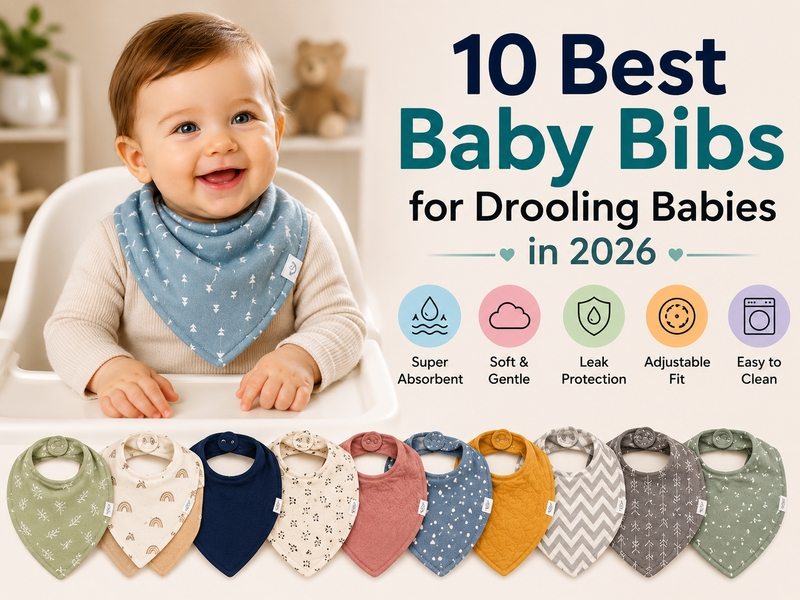
Best Baby Bibs for Drooling Babies can help keep your baby’s clothes dry, comfortable, and protected
| Bib Brand | Bib Brand | Best For |
| Green Sprouts Muslin Bibs | 4-Layer Muslin Cotton | Heavy Droolers |
| KeaBabies Bandana Bibs | Organic Cotton + Fleece | Sensitive Skin |
| Parker Baby Bandana Bibs | Parker Baby Bandana Bibs | Everyday Use |
| Lalo Smock Bib | Waterproof Polyester | Messy Eaters |
| Babynetic Magnetic Bib | Cotton Blend | Quick Changes |
| Copper Pearl Bandana Bibs | Cotton + Fleece | Teething Babies |
| Tiny Twinkle Snap Bibs | Waterproof Fabric | Daycare |
| BabyBjörn Soft Bib | BPA-Free Plastic | Feeding Time |
| Mushie Silicone Bib | Food-Grade Silicone | Baby-Led Weaning |
| Burt’s Bees Baby Bibs | Organic Cotton | Newborns |
Green Sprouts Muslin Bibs
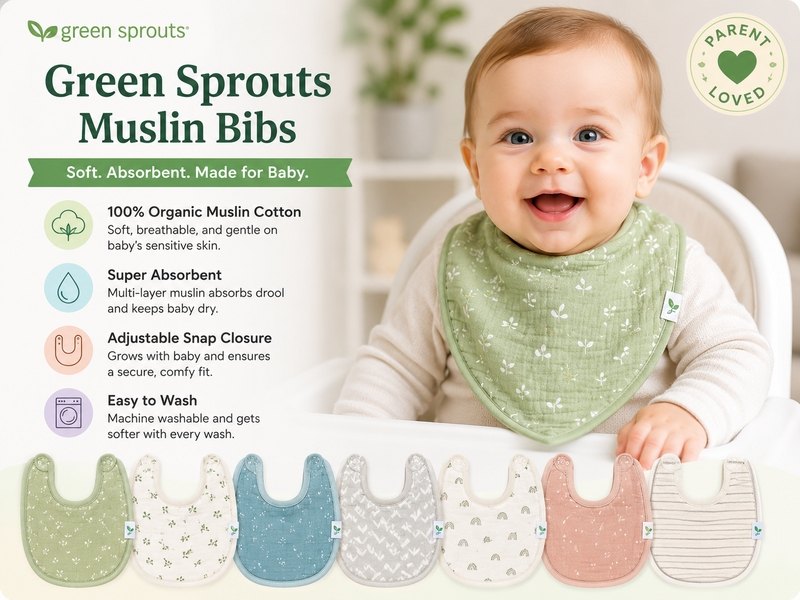
Green Sprouts Muslin Bibs are among the most absorbent options available for babies who drool heavily throughout the day.
Key Features
- Four absorbent muslin layers
- Soft organic cotton construction
- Adjustable snap closures
- OEKO-TEX certified materials
Best For
Parents looking for maximum absorbency and all-day comfort.
KeaBabies Bandana Bibs
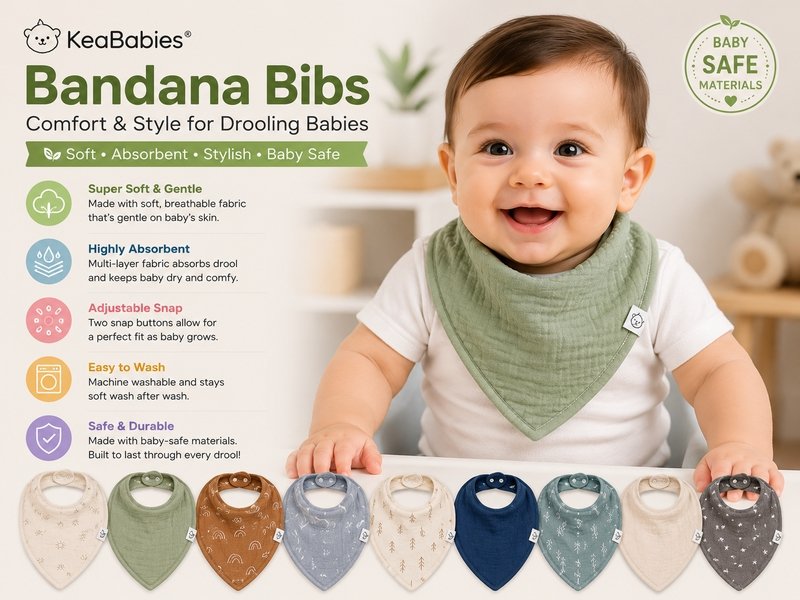
KeaBabies Bandana Bibs combine organic cotton with a soft fleece backing, making them a favorite among parents of sensitive-skinned babies.
Key Features
- Organic cotton front
- Absorbent fleece backing
- Adjustable snaps
- Stylish bandana design
Best For
Parents who want both appearance and performance.
Lalo Smock Bib
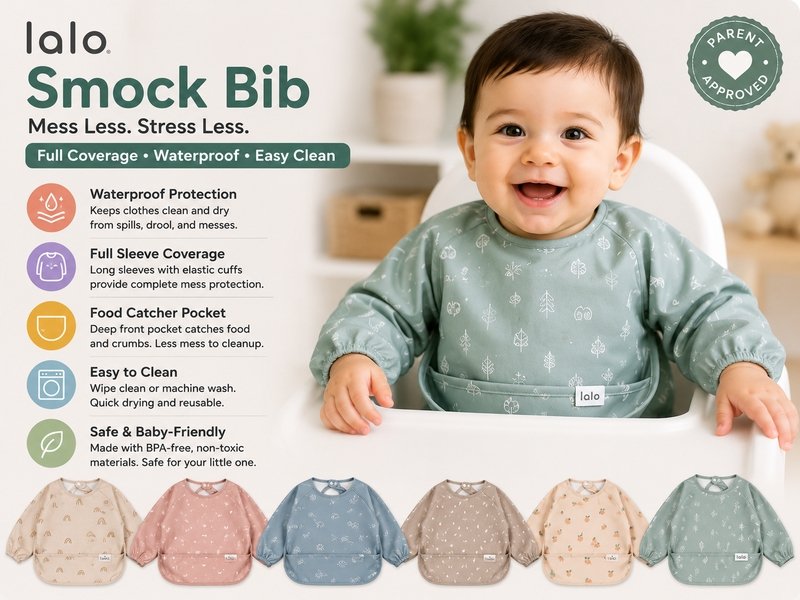
The Lalo Smock Bib provides extended coverage and is ideal for messy eaters.
Key Features
- Long-sleeve design
- Waterproof fabric
- Easy-to-clean surface
- Lightweight material
Best For
Mealtime messes and toddlers learning to self-feed.
Babynetic Magnetic Bib
Babynetic offers a unique magnetic closure system that makes bib changes quick and convenient.
Key Features
- Magnetic fastening
- Comfortable fabric
- Secure fit
- Easy on and off
Best For
Busy parents who want fast outfit changes.
Copper Pearl Bandana Bibs
Copper Pearl bibs are known for their premium materials and fashionable patterns.
Key Features
- Soft cotton outer layer
- Absorbent fleece backing
- Modern designs
- Durable construction
Best For
Teething babies who drool frequently.
Tiny Twinkle Snap Bibs
Tiny Twinkle bibs are lightweight, waterproof, and easy to clean.
Key Features
- Waterproof fabric
- Machine washable
- Adjustable closure
- Quick drying
Best For
Daycare use and travel.
Burt’s Bees Baby Bibs
Made with organic cotton, these bibs prioritize softness and comfort.
Key Features
- Organic cotton material
- Gentle on delicate skin
- Machine washable
- Lightweight design
Best For
Newborn babies and infants.
BabyBjörn Soft Bib
Unlike traditional cloth bibs, BabyBjörn Soft Bibs feature a sturdy catch pocket for feeding time.
Key Features
- BPA-free plastic
- Deep food-catching pocket
- Adjustable neck closure
- Easy cleaning
Best For
Reducing feeding messes.
Mushie Silicone Bib
Mushie Silicone Bibs are popular among parents practicing baby-led weaning.
Key Features
- Food-grade silicone
- Adjustable fit
- Deep catch pocket
- Easy wipe-clean surface
Best For
Self-feeding babies and toddlers.
Key Insights: How to Pick the Best Baby Bibs
1. Material Safety
Look for bibs made from high-quality materials such as organic cotton, food-grade silicone, or certified fabrics that are safe for babies.
2. Size and Fit
A bib should fit comfortably around your baby’s neck without being too tight or too loose. Adjustable snaps are highly recommended.
3. Ease of Washing
Frequent washing is unavoidable. Choose bibs that hold their shape and softness after repeated laundering.
4. Quantity Needed
For heavy droolers, many parents find it helpful to keep 10–20 bibs available to rotate throughout the week.
Common Mistakes Parents Make When Buying Bibs
After years of working with baby products, these are the most common mistakes I see:
- Choosing style over absorbency
- Ignoring waterproof backing
- Buying poor-quality synthetic materials
- Using feeding bibs for drooling protection
- Purchasing too few bibs for daily use
Avoiding these mistakes can save time, money, and laundry.
Parents can find additional infant care and teething information on HealthyChildren.org
Frequently Asked Questions
Q1. How many bibs does a newborn need?
For babies who drool heavily, having 10–20 bibs available is often practical. This allows for daily use while others are being washed.
Q2. Are bandana bibs better than traditional bibs?
Bandana bibs provide better neck coverage and are often preferred for drooling. Traditional bibs are generally better suited for feeding.
Q3. Can I use bibs for teething babies?
Yes. Many drool bibs are designed specifically for teething babies and help keep clothing dry throughout the day.
Q4. What material is best for drooling bibs?
Organic cotton with an absorbent backing is a popular choice for comfort and moisture control.
Related Reading:
- Best Baby Sleep Products in 2026
- Premature Baby Clothes for Tiny Preemies
Important Disclaimer – Momme Closet
Prices, product availability, and product features may change over time. Information in this article is provided for educational and informational purposes only. Parents should always verify current product details before making a purchase decision.
Medical Note: Bibs can help manage drooling and protect clothing, but persistent skin irritation, excessive drooling, or feeding concerns should be discussed with a qualified pediatrician.
Final Verdict
A good bib does more than keep clothes dry—it can help reduce outfit changes, minimize skin irritation, and make everyday parenting a little easier.
For heavy droolers, Green Sprouts Muslin Bibs stand out because of their multi-layer absorbency. KeaBabies Bandana Bibs are an excellent option for sensitive skin, while Mushie Silicone Bibs are ideal for self-feeding stages.
The best bib ultimately depends on your baby’s age, drooling level, and daily routine. Investing in a high-quality bib can save time, laundry, and frustration.
Which bib has worked best for your baby? Share your experience in the comments below!