Best Bibs for Newborn – Fabric vs Silicone Comparison Guide
🍼 Introduction: The Reality No One Talks About
There’s a moment in early parenthood no one truly prepares you for. You dress your baby in a fresh, adorable outfit… and within seconds—urp! 😅
Milk spit-up all over. Outfit ruined. Mood gone.
This is where an underrated hero steps in—the best bibs for newborn.
But here’s the truth:
Most parents end up buying the wrong bibs—thin, low-quality ones that soak through in minutes.
In this guide, we’re not just covering basics—we’re combining real-life experience with practical insights to help you keep your baby dry, comfortable, and rash-free.
Struggling with overall newborn care? Don’t miss our guide on best baby sleep products for newborn to create a comfortable sleep routine.
🧠 Why Newborns Actually Need Bibs (It’s Not Just About Feeding)
Most people think bibs are only for feeding.
👉 Reality: For newborns, moisture control is more important than food.
🔬 The Science (Simplified)
- Newborns have immature digestion → frequent spit-up
- Around 6–8 weeks → drooling increases
👉 Result:
- Neck rashes
- Skin irritation
- Constant wetness
👉 Solution:
The best bibs for newborn act as a moisture barrier, keeping skin dry and healthy.
According to pediatric experts at the American Academy of Pediatrics, keeping a baby’s skin dry helps prevent irritation and rashes.
✔ Why Drooling and Spit-Up Happens in Newborns
Newborns naturally drool and spit up because their swallowing reflex and digestion are still developing. This makes using the best bibs for newborn an everyday necessity.
✔ Features to Look for in the Best Bibs for Newborn
When choosing bibs, parents should focus on:
- High absorbency (cotton + fleece)
- Soft and breathable material
- Adjustable neck fit
- Skin-friendly fabric
These features ensure you select the best bibs for newborn feeding and drooling protection.
✔ Cotton vs Silicone: Which Bib is Better for Drooling?
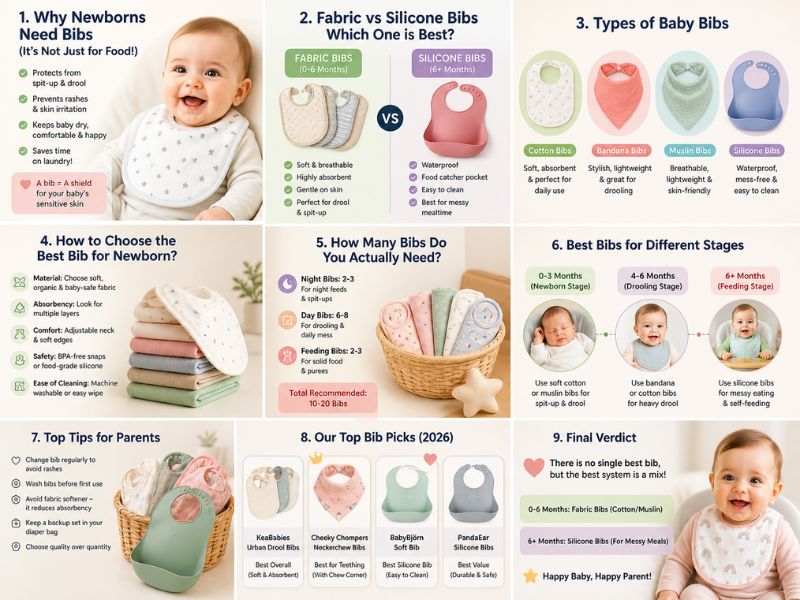
Complete comparison of the best bibs for newborn including fabric vs silicone, types, benefits, and feeding guide.
Cotton bibs are ideal for absorbing drool and keeping your baby dry, while silicone bibs are better for feeding time. For newborns, cotton options remain the best bibs for newborn drooling.
⚔️ Fabric vs Silicone Bibs (The Most Important Decision)
🟢 1. Fabric Bibs (Cotton / Muslin / Bamboo)
Best for: 0–6 months
✔ Advantages:
- Soft and breathable
- Gentle on sensitive skin
- Highly absorbent (great for drool)
🔥 Key Insight:
High-quality bibs use dual-layer design (cotton + fleece)
👉 Locks in moisture effectively
💡 Popular Picks:
- KeaBabies (high absorbency)
- Cheeky Chompers (teething-friendly)
❌ Downsides:
- Get wet quickly
- Need frequent changing
🔵 2. Silicone Bibs (Heavy Duty Option
Best for: 6+ months (solid feeding stage)
✔ Advantages:
- Waterproof
- Built-in food catcher pocket
- Easy to clean (wipe and reuse)
💡 Top Picks:
- BabyBjörn Soft Bib
- PandaEar Silicone Bib
❌ Downsides:
- No absorbency
- Not suitable for newborn drooling
👉 Drool will simply run off
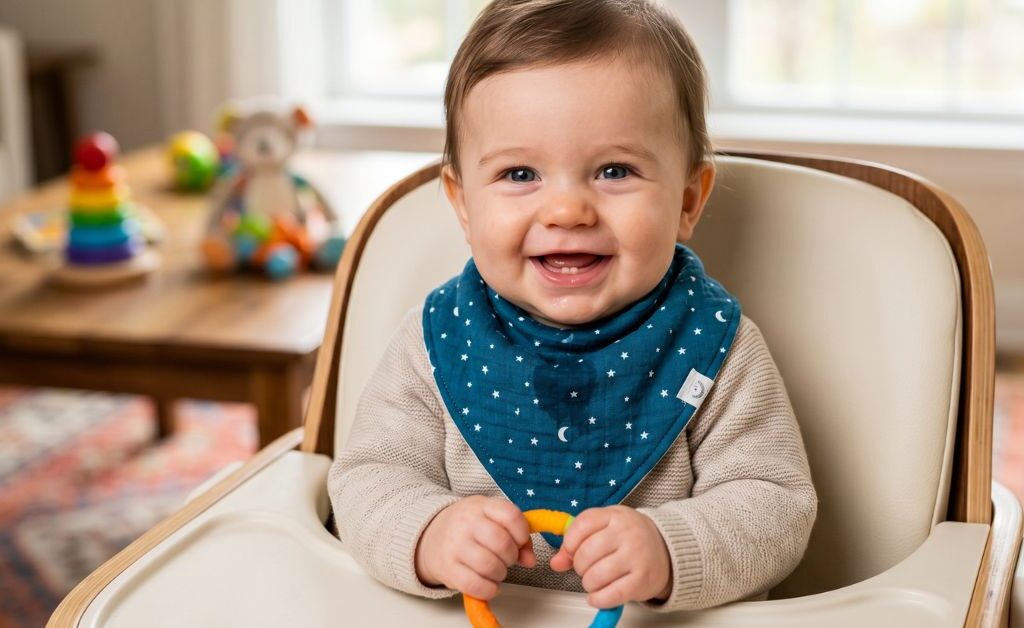
🧣 Bandana Bibs: Style Meets Function?
Bandana bibs have become very popular.
✔ Why Parents Love Them:
- Stylish look
- Comfortable fit
- Ideal for daily wear
⚠️ Reality Check:
- Great for light drool
- Not effective for heavy feeding mess
👉 Conclusion:
Best bibs for newborn daily use = Bandana + Cotton combo
📊 Quick Comparison Table
| Feature | Fabric Bibs | Silicone Bibs |
|---|---|---|
| Age Group | 0–6 months | 6+ months |
| Softness | ⭐⭐⭐⭐⭐ | ⭐⭐ |
| Absorbency | ⭐⭐⭐⭐ | ❌ |
| Waterproof | ❌ | ✅ |
| Skin Friendly | ✅ | ⚠️ |
| Best Use | Drool & spit-up | Solid feeding |
🛒 How to Choose the Best Bibs for Newborn (Expert Guide)
✔ 1. Fastener Type
- Snap buttons → best choice
- Velcro → avoid (loses grip over time)
✔ 2. Material
- Organic cotton → safest
- Fleece backing → better absorbency
✔ 3. Fit
- Adjustable neck
- Not too tight
✔ 4. Layers
- Single layer ❌
- Double layer ✅
📦 Real-World Bib Strategy (Most Practical Advice)
Experts recommend: 10–20 bibs 😲
👉 Why?
Babies can go through 3–5 bibs per day
🎯 Smart Setup
🌙 Night Bibs (2–3)
- Soft cotton
- Ideal for night feeding
☀️ Day Bibs (6–8)
- Bandana style
- Handles drooling
🍽️ Feeding Bibs (2–3)
- Silicone bibs
- For mess-free meals
👉 This combination creates the best bib system for newborn care
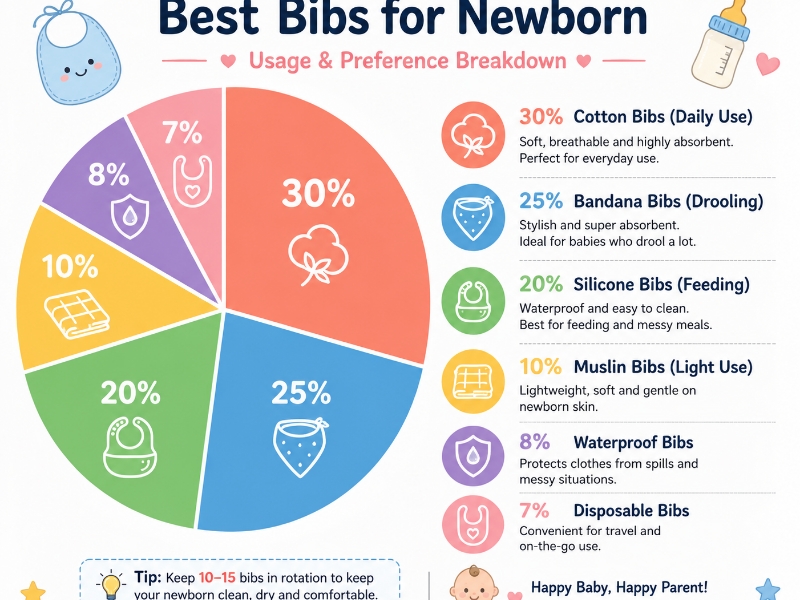
Hidden Tips
✔ Avoid Fabric Softener
👉 Reduces absorbency
✔ Keep Budget Bibs as Backup
👉 Useful for emergencies
✔ Monitor Baby’s Skin
👉 If rash appears → change bib immediately
🚀 Final Verdict (Simple Summary)
👉 There is no single perfect bib
👉 The perfect solution is a system
✔ Newborn (0–6 months)
- Cotton + Bandana bibs
✔ 6 months+
- Silicone bibs
👉 Your goal:
- Keep baby dry
- Prevent rashes
- Reduce laundry stress
💬 Call-To-Action (CTA)
What’s your biggest challenge with baby mess?
👉 Drooling or feeding spills?
Share your experience in the comments 👇
Your tips can help other parents too!
If you found this guide helpful:
✔ Share it
✔ Save it
✔ Explore more baby care tips on our blog
Want better sleep for your baby? Check out our complete guide on baby sleep products 2026.
Frequently Asked Questions (FAQs)
1. What are the best bibs for newborn drooling?
The best bibs for newborn drooling are soft cotton or fleece-backed bibs that absorb moisture and keep the baby’s skin dry.
2. How many bibs does a newborn need daily?
Newborns usually need 3–5 bibs per day, especially during the drooling and spit-up stage.
3. Are silicone bibs safe for newborns?
Silicone bibs are safe but are more suitable for feeding time rather than drooling, as they are not absorbent.
4. Which material is best for newborn bibs?
Organic cotton with fleece backing is considered the best material for newborn bibs due to its softness and absorbency.